


Let Them Eat Ultra-Processed – Is a Revolution Needed to Fix the Food System?
We have the tools and the know how to fix our beleaguered food system. Contrary to what Big Ag tells us, we can feed everyone on the planet through regenerative agro-ecology. This way of farming makes sure future generations can continue to produce food, by nurturing rather than depleting the soil and other systems on which it depends.
The shift to a truly sustainable food system is possible, but vested interests wish to maintain the current profit-led system, despite continued hunger, diet related disease, emissions and ecosystem collapse. As citizens we need to keep up the pressure on our politicians to support small scale farming instead of caving to pressure from corporate interests. At the same time, we need to nurture an alternative food production system to build resilience as we face into the inevitable climate and biodiversity crisis related shocks which will change everything about the way we eat, buy and produce food.
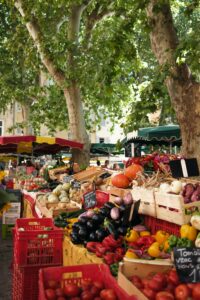
Photo by Christian Mackie on Unsplash
Although my essay below is about the EU, the situation in Ireland exemplifies much of what is going wrong with food in the region. With our focus on intensive export-orientated meat production and our high need for food imports, we exacerbate the risk of and are extremely vulnerable to, climatic and other supply-change shocks. About a third of our daily calories come from ultra-processed foods and we have one of the highest levels of obesity in the region. The literature on food system transformation in Europe consistently focuses on the need for better governance, and, as Ireland also has one of the most centralised systems in Europe, this is a challenge for championing local production, diversification and exchange of knowledge around nature-friendly farming. However, there are many examples of positive work on the ground and through my friend Mary Hoy, I am aware of the mighty work of Talamh Beo and was grateful to get some feedback from the women farmers there on this essay. On an urban level, I know that the Cork Food Policy is doing great work thanks to a talk by Colin Sage at Earth Rising in IMMA back in September 2024 and the pioneering work of Feeding Ourselves is an example of exactly the kind of holistic learning hub needed to increase food resilience in Ireland.
On an EU and a global level, however, challenging the mega-corporations controlling the seeds, pesticides, tools, distribution and production (and arguably the governance) of the food we eat feels particularly daunting, especially given the reality of Trump Part 2. What we do know is that the global food system is built by superimposing financial speculation and the myth of infinite growth on the very physical reality of ecological limits in terms of soil, water, seeds and energy. The house of cards will eventually topple and when it does we will be thankful for the food revolutionaries around Ireland, Europe and the rest of the world. Deep system change is challenging, but tinkering around the edges is no longer enough. As described in the Intergovernmental Science-Policy Platform on Biodiversity and Ecosystem Services’s recent report:
Transformative change is urgent to address the scope and scale of current sustainability challenges, including the decline and projected collapse of key ecosystem functions and loss of biodiversity. It is necessary because previous and current approaches have failed to halt or reverse nature’s decline at a global scale, which has serious repercussions for the global economy and human well-being.
IPBES Transformative Change Assessment 2024
The short mock white paper style essay below (which I wrote as part of a Masters degree in Climate, Justice and Sustainability) considers how the EU could achieve a transition towards sustainability in the agri-food sector. I enjoyed delving into the research on food issues having delivered food system education for many years through my Global Citizenship Education roles with the Latin America Solidarity Centre and LYCS in Dublin. Here are some resources I collated back then for education around food and other related issues.
Feel free to add comments and thoughts below and thanks in advance for reading.
How the EU can transition to a just and sustainable Agri-Food system
Executive Summary
The EU agri-food system is no longer able to fulfil its most fundamental purpose, that is, to provide a secure source of nutritious food to all its citizens while protecting the natural environment on which it depends. This paper describes how, since the start of the post-war era, an increasingly free-market ideology in Europe has contributed to a focus on intensification, commodity export and short-term profit in the EU agri-food system, to the detriment of planetary and human health (Paul et al., 2019). This paper puts forward a clear three-pronged strategy for systemic transformation of the EU agri-food system, that is, by converting to agroecology through governance reform, the creation of food hubs and the reduction of corporate control. While current attempts to reform the food system are acknowledged, this paper finds that unless the raison d’être of the system is reimagined, the proposed changes may simply serve to reproduce its current failings. Systemic change will not remain unopposed, especially by powerful vested interests (Gliessman, 2018), but at this critical juncture, with increased conflict and extreme weather exposing its vulnerabilities, EU leaders and civil society must rise to the challenge of restoring our ailing agri-food system to create a sustainable source of nutritious food for all.
Introduction and Background
There is growing consensus on the need to transform the European agri-food system (EESC, 2024). As stated by Baungaard et al. ‘food systems are not fit for purpose, transgressing planetary boundaries, causing unhealthy consumption patterns and are rife with inequality’ (Baungaard et al. (2021 p.172). The EU (and the global food system into which it is embedded), is compromising future food security by eroding biodiversity (80% of Europe’s natural habitats are degraded) and contributing to climate change (Haahr, 2024). The highly industrialised and intensive nature of the system can be traced back to the post-war Green Revolution, which led to bigger farms and higher food yields through increased monoculture, mechanisation, and use of agri-chemical inputs. The European Common Agricultural Policy (CAP) was established in 1957 to support farmers and increase productivity (Cuadros‐Casanova et al., 2023). CAP subsidies have incentivised high yields and commodity export through farm consolidation and the use of chemical inputs, with particular emphasis on dairy and beef farming. Despite multiple reforms, historic CAP spending has exacerbated income inequality within agriculture and failed to sufficiently finance climate-friendly and biodiverse farming (Scown and Brady, 2020). Later in the 20th century, the neoliberal political economy heralded in free trade agreements and deregulation, giving rise to increased corporate dominance of the food system (Clapp, 2022). Although highly productive, the EU food system is not resilient to climate and geopolitical shocks. Local food production lacks variety and is highly reliant on fertiliser and animal feed imports, often produced unsustainably outside the EU (Brzezinski et al., 2022). Food prices and supply chain vulnerability have been impacted by COVID-19, the Ukraine invasion in 2022 and recent extreme weather events (Edmond and Geldard, 2024; Marsden, Hebinck and Mathijs, 2018). Both the 2020 EU Farm to Fork food policy (European Commission, 2020) and the 2023 CAP reforms seek to bring about a shift to a more sustainable food system. While some have claimed they do not go far enough in terms of sustainability (Moschitz et al., 2021; (Cuadros‐Casanova et al., 2023), many of the green measures have been met with angry reactions from beleaguered farmers. Unless the EU addresses the inherent inequality and lack of grassroots participation in the system through deeper systemic changes, it will fail at implementing even minor pro-environmental reforms.
Issues with the EU Agri-Food System
Agriculture is the main driver of environmental degradation in Europe and is also leading to ecosystem loss around the globe through imports (Pe’er et al., 2020). Food production systems in the EU rely on synthetic pesticides and fertilisers to drive high yields, with consequences for human health and pollution, biodiversity loss, and pest resistance (EEA, 2023). Globally, about a third of all greenhouse gas emissions are linked to the food system (Mirzabaev et al., 2023), especially to its land use (Clark et al., 2020). This issue is exacerbated by the fact that the EU wastes as much as 173 kg of food per person every year (Brzezinski et al., 2022). The EU agri-food system is heavily focused on animal-based products and relies heavily on imported soy feed associated with deforestation. Though promoted by CAP policy (Brzezinski et al., 2022), animal agriculture has a much greater environmental impact than growing plants for human consumption (Ritchie, Roser and Rosado, 2022).
The EU agri-food system is also failing to provide citizens with a healthy balanced diet. Europeans consume four times more red meat than recommended levels (Muzi, 2023) and twice the global average (Oltermann et al., 2022). There is also overconsumption of cheap, highly promoted and highly processed food and over 50% of adults in the EU are either overweight or obese with diet-related illnesses contributing to premature mortality and increasing healthcare costs (Yanatma, 2023). Consumption of highly processed food is also contributing to nutrient deficiency in European populations (Mensink et al., 2013). The need to build healthy ‘food environments’ has been recognised, as people’s food choices are shaped by price and availability which are determined by social and economic factors (De Schutter, Jacobs and Clément, 2020). Obesity correlates strongly to income inequality (Żukiewicz-Sobczak et al., 2014) and in 2022, 8.3% of the EU population experienced food poverty (Eurostat, 2023). Additionally, the chemicals used to produce food in the EU are contributing to chronic illnesses including cancers and cardiovascular diseases (European Environment Agency, 2023). As demonstrated by Zaman et al., (2015) these issues of agricultural sustainability and food poverty and inequality are interlinked and are symptoms of system dysfunction.
Another aspect of inequality in the EU agri-food system is that of power and influence over decision-making. The system is dominated by a small number of transnational corporations (Omar and Thorsøe, 2023) and in the last three years, the profits of the five biggest agricultural commodities traders tripled (Kiezebrink and Hietland, 2024). As well as being able to influence wages, prices and availability of products (Omar and Thorsøe, 2023) corporations have power over policymaking in the EU, where public funding for technical innovation in animal products is around 1,200 times the equivalent for plant-based products, and three times more is spent lobbying for animal than plant-based products (Vallone and Lambin, 2023). Meanwhile, rising food prices are affecting consumers and European farmers have taken to the streets, sometimes violently, as they feel pressured by public demands for cheap food amidst newer climate regulations which put further demands on them (Henley, 2024). And as argued by Niranjan (2024), farmers’ discontent could translate into a right-wing agrarian populist movement, something the EU leaders will want to avoid. The question is whether they will water down Farm to Fork environmental regulations to appease the farmers or whether a deeper restructuring of the food system will ensue (European Commission, 2020). Critics have said that the latest pro-environmental reforms for 2023-2027 represent a ‘missed opportunity to support a transition towards more agroecological and sustainable models’ (Friends of the Earth Europe, 2021) and continue to risk biodiversity and ecosystems through monoculture and lack of livestock diversity (Cuadros‐Casanova et al., 2023).
Moving to an Ecological and Nutrition Centred Food System
Initiatives such as the 2019 European Green Deal, the 2020 EU Farm to Fork Strategy and the 2023 CAP reforms represent attempts from within the EU to transform the food system, but they fall short in terms of providing ‘whole system change towards an ecological and nutrition centred food policy’ (Marsden, Hebinck and Mathijs, 2018 p 1301). Moschitz et al. (2021) state that the European Commission’s Farm to Fork Strategy focuses excessively on technical innovations while overlooking social and structural factors. Langlais (2023) points out that the definition of sustainable agriculture in the reformed CAP is too weak and its fundamental objectives remain unchanged. Nothing short of a new paradigm is needed (Morley and Marsden 2014) and to arrive at this, a departure from traditional mechanistic thinking is needed. Systems thinking emphasises relationships and interconnections and views the system holistically (Behl and Ferreira, 2014). This perspective is echoed in Murphy, Carey, and Alexandra’s (2023) call for collaboration throughout supply chains and De Schutter, Jacobs and Clément’s (2020) proposal of an integrated food policy framework. Sonnino and Milbourne (2022) also focus on relationships, emphasising a socio-spatial lens for positing a new food system. The shift towards an ecological and nutrition-centred food system will not happen without capacity building in terms of new agricultural methods as well as in systems thinking for decision-makers however, so education and training are needed to support this shift (Moschitz et al. 2021; Baungaard et al., 2021; Den Boer, Broerse and Regeer, 2021).
In addition to focusing more on social and capacity-building factors to transform the food system, it is crucial to look at its fundamental purpose. While the current industrialised export-oriented food policy focuses on productivity and short-term profits (EEA 2022), a resilient ecological and nutrition-led system is needed. These principles have already been coalesced into the concept of agroecology, defined as a ‘holistic and integrated approach that simultaneously applies ecological and social concepts and principles to the design and management of sustainable agriculture and food systems’ (FAO, 2024, p 1). In various studies, agro-ecology has been found to be a viable alternative to conventional industrial agriculture in terms of productivity (Aparicio, 2018; Billen et al., 2021; Gallardo-López et al., 2018; Pretty and Hine, 2001), and importantly, it is a concept which recognises the need for transdisciplinary change not only in the science and practice of growing food but also in the relationships and power structures which make up the food system, also found to be a significant factor by Brouwer, McDermott and Ruben (2020). The many local examples in Europe of agro-ecology practice, from permaculture to regenerative agriculture need support to scale up and multiply. However, it is important to recognise the structural and political barriers to doing so. Thus, while place-based approaches are essential, a meso-level or multi-scalar vision is also needed (Sonnino and Milbourne, 2022; Webb et al., 2022).
The implementation of an agro-ecological system needs multi-level governance reform. As stated by De Schutter, Jacobs and Clément (2020 p1), ‘EU governance is ill-adapted to address the systemic nature of food system challenges’, recommending cross-sectoral, participatory, integrated, and coherent governance to break the current siloed approach. Huttunen, Turrunen and Kaljonen, (2021) focus particular attention on the need for more participatory and reflexive governance. Marsden, Hebinck and Mathijs (2018) also emphasise the importance of supporting existing counter-hegemonic innovations in the food system and suggest more reflexive governance, regulation reform and spaces for envisioning future food systems. Some of these measures may give a meaningful voice to farmers who feel disenfranchised by the current status quo. Again, however, it is essential to recognise the importance of and difficulty in challenging the widespread corporate control of the food system. Food system experts, IPES, have put forward a range of important measures to curtail corporate control of the food system, from dealing with conflict of interest to curbing lobbying which would be necessary alongside more local and regional governance reforms (Anderson et al., 2023).
Recommendations
To transform the agri-food system systemically, several mutually reinforcing and interrelated leverage points will need to be tackled simultaneously. These are:
- Governance Reform
Governance needs to be decentralised, participatory, democratic, and reflexive at all levels, from EU decision-making to town planning. While reform at a national or multi-lateral level will be more challenging and long-term, local, and municipal government reform could happen in the short to medium term.
- Establishment of Bio-Regional Food System Hubs
All over Europe new spaces need to be created and funded to bring together diverse stakeholders, including the most marginalised, to envision a future food system (Marsden, Hebinck and Mathijs, 2018). These hubs need to receive state funding but operate with a level of ideological and administrative autonomy. Food hubs should provide a forum for conflict resolution, policy recommendations, management of a capacity-building budget and cross-pollination of ideas. While there may be local ideological resistance to such hubs in some quarters, the need for EU and national funding to be channelled to this measure is clearly demonstrable.
- Reduction in Corporate Control of the Agri-Food System
Current inadequate measures to curb corporate control of the food system need to be replaced with the concerted ones put forward by the IPES in their 2023 report (Anderson et al., 2023). While this set of measures may be met with the most resistance of all and require bold leadership from public representatives and civil society, they are crucial for more meaningful change in the EU agri-food system.
References
Anderson, M., Clapp, J., Guttal, S., Pascal, A. and Suarez, S.M. (2023). Who’s Tipping the Scales – The Growing Influence of Corporations on the Governance of Food Systems, and How to Counter It. [online] Available at: https://www.ipes-food.org/_img/upload/files/tippingthescales.pdf [Accessed 2 Mar. 2024].
Aparicio, V., Zamora, M., Barbera, A., Castro-Franco, M., Domenech, M., De Geronimo, E. and Costa, J.L. (2018). Industrial Agriculture and Agroecological Transition systems: a Comparative Analysis of Productivity results, Organic Matter and Glyphosate in Soil. ScienceDirect, [online] 167, pp.103–112. doi:https://doi.org/10.1016/j.agsy.2018.09.005.
Baungaard, C., Kristiaan P.W. Kok, den, C.L., Brierley, C., van, Mads Dahl Gjefsen, Jolien Wenink, Wagner, P., Gemen, R., Regeer, B.J. and Jacqueline E.W. Broerse (2021). FIT4FOOD2030: Future‐proofing Europe’s Food Systems with Tools for Transformation and a Sustainable Food Systems Network. Nutrition Bulletin, 46(2), pp.172–184. doi:https://doi.org/10.1111/nbu.12502.
Behl, D.V. and Ferreira, S. (2014). Systems Thinking: An Analysis of Key Factors and Relationships. Procedia Computer Science, 36, pp.104–109. doi:https://doi.org/10.1016/j.procs.2014.09.045.
Billen, G., Aguilera, E., Einarsson, R., Garnier, J., Gingrich, S., Grizzetti, B., Lassaletta, L., Le Noë, J. and Sanz-Cobena, A. (2021). Reshaping the European agro-food System and Closing Its Nitrogen cycle: The potential of Combining Dietary change, agroecology, and Circularity. One Earth, 4(6), pp.839–850. doi:https://doi.org/10.1016/j.oneear.2021.05.008.
Brouwer, I.D., McDermott, J. and Ruben, R. (2020). Food Systems Everywhere: Improving Relevance in Practice. Global Food Security, [online] 26, p.100398. doi:https://doi.org/10.1016/j.gfs.2020.100398.
Brzezinski, B., Le Merle, H., Jeffries, B., Dooren, V., Meunier, A., Mcfeely, P., Schuster, M., Mulet, M., Höynälänmaa, S., Richert, A., Dräger De Teran, T., Laaksonen, N., Milo-Dale, L., Korbel, A., Schulmeister, A., Lambrechts, L., Leroy, A., Berger, M., Luís, T. and Peiteado, C. (2022). Europe Eats the World: How the EU’s Food Production and Consumption Impact the Planet. [online] https://www.wwf.eu/. World Wide Fund For Nature (formerly World Wildlife Fund). Available at: https://wwfeu.awsassets.panda.org/downloads/europe_eats_the_world_report_ws.pdf.
Clapp, J. (2022). The Rise of Big Food and Agriculture: Corporate Influence in the Food System. [online] www.elgaronline.com. Available at: https://www.elgaronline.com/edcollchap-oa/book/9781800880269/book-part-9781800880269-11.xml [Accessed 1 Mar. 2024].
Clark, M.A., Domingo, N.G.G., Colgan, K., Thakrar, S.K., Tilman, D., Lynch, J., Azevedo, I.L. and Hill, J.D. (2020). Global Food System Emissions Could Preclude Achieving the 1.5° and 2°C Climate Change Targets. Science, 370(6517), pp.705–708. doi:https://doi.org/10.1126/science.aba7357.
Cuadros‐Casanova, I., Cristiano, A., Biancolini, D., Cimatti, M., Sessa, A.A., Mendez Angarita, V.Y., Dragonetti, C., Pacifici, M., Rondinini, C. and Di Marco, M. (2023). Opportunities and challenges for Common Agricultural Policy reform to support the European Green Deal. Conservation Biology, 37(3). doi:https://doi.org/10.1111/cobi.14052.
De Schutter, O., Jacobs, N. and Clément, C. (2020). A ‘Common Food Policy’ for Europe: How governance reforms can spark a shift to healthy diets and sustainable food systems. Food Policy, 96(101849), p.101849. doi:https://doi.org/10.1016/j.foodpol.2020.101849.
Den Boer, A.C., Broerse, J.E. and Regeer, B.J. (2021). The Need for Capacity Building to Accelerate Food System Transformation. Current Opinion in Food Science, 42, pp.119–126. doi:https://doi.org/10.1016/j.cofs.2021.05.009.
Edmond, C. and Geldard, R. (2024). Prices for These Crops Are Most Impacted by Climate Change. [online] World Economic Forum. Available at: https://www.weforum.org/agenda/2024/02/climate-change-food-prices-drought/ [Accessed 2 Mar. 2024].
European Commission (2020). Farm to Fork Strategy for a Fair, Healthy and Environmentally-Friendly Food System. [online] Available at: https://food.ec.europa.eu/document/download/472acca8-7f7b-4171-98b0-ed76720d68d3_en?filename=f2f_action-plan_2020_strategy-info_en.pdf.
European Economic and Social Committee (2024). A Just Transition to Ensure a Sustainable Future for the EU Agri-food Systems. [online] European Economic and Social Committee. Available at: https://www.eesc.europa.eu/en/our-work/opinions-information-reports/opinions/just-transition-ensure-sustainable-future-eu-agri-food-systems [Accessed 1 Mar. 2024].
European Environment Agency (2022). Rethinking Agriculture — European Environment Agency. [online] www.eea.europa.eu. Available at: https://www.eea.europa.eu/publications/rethinking-agriculture.
European Environment Agency (2023). How Pesticides Impact Human Health and Ecosystems in Europe — European Environment Agency. [online] www.eea.europa.eu. Available at: https://www.eea.europa.eu/publications/how-pesticides-impact-human-health/ [Accessed 5 Mar. 2024].
Eurostat (2023). How Many People Can Afford a Proper Meal in the EU? – Products Eurostat News – Eurostat. [online] ec.europa.eu. Available at: https://ec.europa.eu/eurostat/web/products-eurostat-news/w/ddn-20230710-1#:~:text=In%202022%2C%208.3%25%20of%20the [Accessed 5 Mar. 2024].
FAO (2024). Overview | Agroecology Knowledge Hub | Food and Agriculture Organization of the United Nations. [online] www.fao.org. Available at: https://www.fao.org/agroecology/overview/en/ [Accessed 7 Mar. 2024].
Friends of the Earth Europe (2021). CAP Fails Small Farmers and the Environment yet Again. [online] Friends of the Earth Europe. Available at: https://friendsoftheearth.eu/press-release/cap-fails-small-farmers-and-the-environment-yet-again/ [Accessed 7 Mar. 2024].
Gallardo-López, F., Hernández-Chontal, M., Cisneros-Saguilán, P. and Linares-Gabriel, A. (2018). Development of the Concept of Agroecology in Europe: A Review. Sustainability, 10(4), p.1210. doi:https://doi.org/10.3390/su10041210.
Gliessman, S. (2018). Defining Agroecology. Agroecology and Sustainable Food Systems, [online] 42(6), pp.599–600. doi:https://doi.org/10.1080/21683565.2018.1432329.
Haahr, T. (2024). Nature restoration: Parliament Adopts Law to Restore 20% of EU’s Land and Sea | News | European Parliament. [online] www.europarl.europa.eu. Available at: https://www.europarl.europa.eu/news/en/press-room/20240223IPR18078/nature-restoration-parliament-adopts-law-to-restore-20-of-eu-s-land-and-sea [Accessed 14 Mar. 2024].
Henley, J. (2024). Why Are Farmers Protesting across the EU and What Can the Bloc Do about it? The Guardian. [online] 2 Feb. Available at: https://www.theguardian.com/environment/2024/feb/02/why-are-farmers-protesting-across-the-eu-and-what-can-the-bloc-do-about-it [Accessed 6 Mar. 2024].
Huttunen, S., Turrunen, A. and Kaljonen, M. (2021). Participation for Just Governance of Food-System Transition. Sustainability: Science, Practice and Policy, [online] 18(1). doi:https://www.tandfonline.com/doi/full/10.1080/15487733.2022.2088187.
Kiezebrink, V. and Hietland, M. (2024). Hungry for Profits – Monopoly Power in Global Agriculture. [online] Center for Research on Multinationals (SOMO). Available at: https://www.somo.nl/hungry-for-profits/ [Accessed 7 Mar. 2024].
Langlais, A. (2023). The New Common Agricultural Policy: Reflecting an agro-ecological transition. the Legal Perspective. Review of Agricultural, Food and Environmental Studies, 104. doi:https://doi.org/10.1007/s41130-022-00183-1.
Marsden, T., Hebinck, P. and Mathijs, E. (2018). Re-building Food systems: Embedding assemblages, Infrastructures and Reflexive Governance for Food Systems Transformations in Europe. Food Security, 10(6), pp.1301–1309. doi:https://doi.org/10.1007/s12571-018-0870-8.
Mensink, G.B.M., Fletcher, R., Gurinovic, M., Huybrechts, I., Lafay, L., Serra-Majem, L., Szponar, L., Tetens, I., Verkaik-Kloosterman, J., Baka, A. and Stephen, A.M. (2013). Mapping Low Intake of Micronutrients across Europe. British Journal of Nutrition, [online] 110(4), pp.755–773. doi:https://doi.org/10.1017/s000711451200565x.
Mirzabaev, A., Olsson, L., Kerr, R.B., Pradhan, P., Ferre, M.G.R. and Lotze-Campen, H. (2023). Climate Change and Food Systems. Science and Innovations for Food Systems Transformation, [online] pp.511–529. doi:https://doi.org/10.1007/978-3-031-15703-5_27.
Morley, A. and Marsden, T. (2014). Sustainable Food Systems. Routledge.
Moschitz, H., Muller, A., Kretzschmar, U., Haller, L., Porras, M., Pfeifer, C., Oehen, B., Willer, H. and Stolz, H. (2021). How Can the EU Farm to Fork Strategy Deliver on Its Organic promises? Some Critical Reflections. EuroChoices, 20(1), pp.30–36. doi:https://doi.org/10.1111/1746-692x.12294.
Murphy, M., Carey, R. and Alexandra, L. (2023). Building the Resilience of agri-food Systems to Compounding Shocks and stresses: a Case Study from Melbourne, Australia. https://www.frontiersin.org/, [online] 7(1130978). doi:https://doi.org/10.3389/fsufs.2023.1130978.
Muzi, N. (2023). A Small Shift Away from a Meat Diet Could Have a Big Climate Impact. [online] Euronews. Available at: https://www.euronews.com/2023/11/20/a-small-shift-away-from-meat-in-your-diet-could-have-a-major-climate-impact#:~:text=More%20worryingly%2C%20Europeans%20consume%20four [Accessed 5 Mar. 2024].
Niranjan, A. (2024). Why Europe’s Farmers Are Protesting – and the Far Right Is Taking Note. The Guardian. [online] 15 Jan. Available at: https://www.theguardian.com/environment/2024/jan/15/why-europe-farmers-are-protesting [Accessed 6 Mar. 2024].
Oltermann, P., Jones, S., Giuffrida, A. and Henly, J. (2022). Greens V ‘beefatarians’: Europeans Go to War over Their Dinner. [online] The Guardian. Available at: https://www.theguardian.com/environment/2022/jan/21/the-greens-want-to-take-our-meat-away-europeans-go-to-war-over-their-dinner [Accessed 5 Mar. 2024].
Omar, A.H. and Thorsøe, M.H. (2023). Rebalance Power and Strengthen Farmers’ Position in the EU Food system? – A CDA of the Farm to Fork Strategy. Agriculture and Human Values.
Paul, C., Techen, A.-K., Robinson, J.S. and Helming, K. (2019). Rebound Effects in Agricultural Land and Soil management: Review and analytical framework. Journal of Cleaner Production, [online] 227, pp.1054–1067. doi:https://doi.org/10.1016/j.jclepro.2019.04.115.
Pe’er, G., Bonn, A., Bruelheide, H., Dieker, P., Eisenhauer, N., Feindt, P.H., Hagedorn, G., Hansjürgens, B., Herzon, I., Lomba, Â., Marquard, E., Moreira, F., Nitsch, H., Oppermann, R., Perino, A., Röder, N., Schleyer, C., Schindler, S., Wolf, C. and Zinngrebe, Y. (2020). Action Needed for the EU Common Agricultural Policy to Address Sustainability Challenges. People and Nature, [online] 2(2), pp.305–316. doi:https://doi.org/10.1002/pan3.10080.
Pretty, J. and Hine, R. (2001). Reducing Food Poverty with Sustainable Agriculture: A Summary of New Evidence. [online] University of Essex. Available at: https://www.iatp.org/sites/default/files/Reducing_Food_Poverty_with_Sustainable_Agricul.pdf [Accessed 7 Mar. 2024].
Ritchie, H., Roser, M. and Rosado, P. (2022). Environmental Impacts of Food Production. [online] Our World in Data. Available at: https://ourworldindata.org/environmental-impacts-of-food [Accessed 14 Mar. 2024].
Scown, M.W. and Brady, M.V. (2020). Billions in Misspent EU Agricultural Subsidies Could Support the Sustainable Development Goals. One Earth, [online] 3(2), pp.P237-250. doi:https://doi.org/10.1016/j.oneear.2020.07.011.
Sonnino, R. and Milbourne, P. (2022). Food System Transformation: a Progressive place-based Approach. Local Environment, 27(7), pp.915–926. doi:https://doi.org/10.1080/13549839.2022.2084723.
Vallone, S. and Lambin, E. (2023). Public Policies and Vested Interests Preserve the Animal Farming Status Quo at the Expense of Animal Product Analogs. One Earth, [online] 6(9). doi:ttps://doi.org/10.1016/j.oneear.2023.07.013.
Webb, P., Fraser, A., Sonnino, R. and Arnold, T. (2022). Everyone at the Table: Transforming Food Systems by Connecting Science, Policy and Society. [online] https://agritrop.cirad.fr/604448/1/604448%20.pdf. Luxembourg: Publications Office of the European Union, Luxembourg. Available at: https://agritrop.cirad.fr/604448/1/604448%20.pdf [Accessed 17 Feb. 2024].
Yanatma, S. (2023). Europe’s Obesity crisis: Which Countries Are the Most impacted? [online] Euronews. Available at: https://www.euronews.com/health/2023/12/20/europes-growing-obesity-crisis-which-countries-have-the-most-and-least-overweight-populati#:~:text=In%202019%2C%2044.8%20per%20cent [Accessed 7 Mar. 2024].
Zaman, K., Islam, T., Rahman, Z.A., Ghazali, A.S., Hussain, S. and Malik, M.I. (2015). European Countries Trapped in Food Poverty and Inequality: Agricultural Sustainability is the Promising Solution. Social Indicators Research, 129(1), pp.181–194. doi:https://doi.org/10.1007/s11205-015-1098-z.
Żukiewicz-Sobczak, W., Wróblewska, P., Zwoliński, J., Chmielewska-Badora, J., Adamczuk, P., Krasowska, E., Zagórski, J., Oniszczuk, A., Piątek, J. and Silny, W. (2014). Obesity and Poverty Paradox in Developed Countries. Annals of Agricultural and Environmental Medicine, [online] 21(3), pp.590–594. doi:https://doi.org/10.5604/12321966.1120608.

Leave a Reply