


rewilding our soundscapes through inner decolonisation
What has the destruction of the living world got to do with singing and music?
Years ago, when I was living in South London, I remember taking a singing class led by a South African vocalist. We learned to sing in pleasing harmonies, but I have memories of the exacerbated teacher encouraging us mainly white Europeans to sing with our bodies and bellies…. We could produce the notes but struggled to sing in an embodied and expressive way. We had been taught what sounds were beautiful and they weren’t those associated with grief, power, rage, frivolity and longing. Nor were they the ones associated with the gurgling of rivers, the whoosh of the trees in the wind, the croaking of frogs and the soaring of mountain peaks. Many of us were afraid of deep belly breathing and the power of natural emotive sounds, of opening our jaws fully and singing the sounds of our lives and our land.
I have another memory. It was my first week of a year living in Cali, Colombia, the global salsa capital. I was brought by my new friends to a legendary subterranean nightclub down the road, called Tin Tin Deo, where couples danced to ‘salsa dura’, the ‘hard’ brash salsa from the 1970s with political lyrics and long improvisation sections. My friends explained how modern commercial salsa fixated on romance and had lost many of the original musical elements which connected it to its African roots.
This process had been happening for centuries. During colonisation, the musical expression of enslaved Africans and Indigenous people was forcibly repressed and outlawed. Music was connection to breath, body, memory and land, and was a container of culture, spirit, identity, pride. This cauldron of revolutionary rumblings was of course a huge threat to colonial powers. Similarly in Ireland, bards and musicians were persecuted, and gatherings to share music were forbidden.
Even after the era of violent repression of music and culture, the legacy of colonialism lives on. In the Americas, African influenced music such as Cuban son or Brazilian samba was eventually embraced and commercialised, but with a high price. Much of the music as stripped of its original spiritual or communal function and many of its core elements. Complex African polyrhythms were replaced by rigid linear beats, improvised sections were abandoned, raw expressive vocal styles were made smooth and pretty and musical forms were denuded of their spiritual and communal meaning and turned into products for sale. In Ireland, Sean Nos singing lost many of its wilder, more expressive features. Long, free style and heavily ornamented ways of singing were replaced by songs with set rhythm and structure. Microtones were cleaned up, rigid rhythm was introduced and vocal tones were made less nasal or guttural. Gradually, in many instances in Ireland and in the Americas, the music and singing of the oppressed became more palatable, predictable and less culturally powerful. Or it became absent. How many of us have decided we can’t sing and our voices aren’t good enough? When I was in Bolivia with a women’s organisation doing voice workshops with communities in the Andes, one woman told me, ‘I stopped singing when I got married’. In situations where marriage means self-abandonment and servitude, women,especially, lose their voices.
What has all this got to do with nature and sustainability?
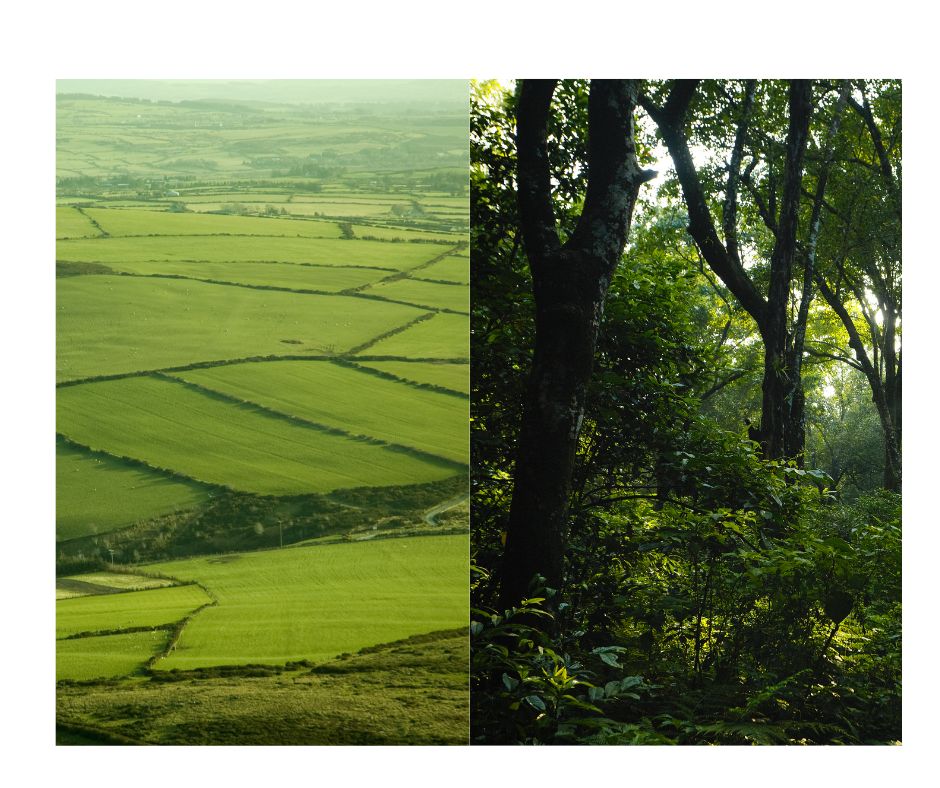
Over the last few centuries monocultures have replaced wild habitats and biodiversity has dwindled. Nature was commodified and resources extracted. Lands were enclosed, lawns were created and people retreated indoors. It has been a similar story musically. Music in many places has become a product to be sold instead of a technology of enchantment. It has been tamed and civilised, stripped down and made more ‘civilised’. Even though singing most likely preceded speech in humans, it is now considered entertainment and something only some are really good at. The range of sounds we produce has narrowed and we feel less connected to our voices, our bodies and the land.
It is all connected.
Check out my latest Thursday night sessions in Dublin 2 here

Leave a Reply